 ENG
ENG
 INA
INA
Faculty of Veterinary Medicine, Udayana University Strengthens Synergy with Bali Quarantine Agency, Promotes Collaboration in Animal Disease Surveillance and Human Resource Development
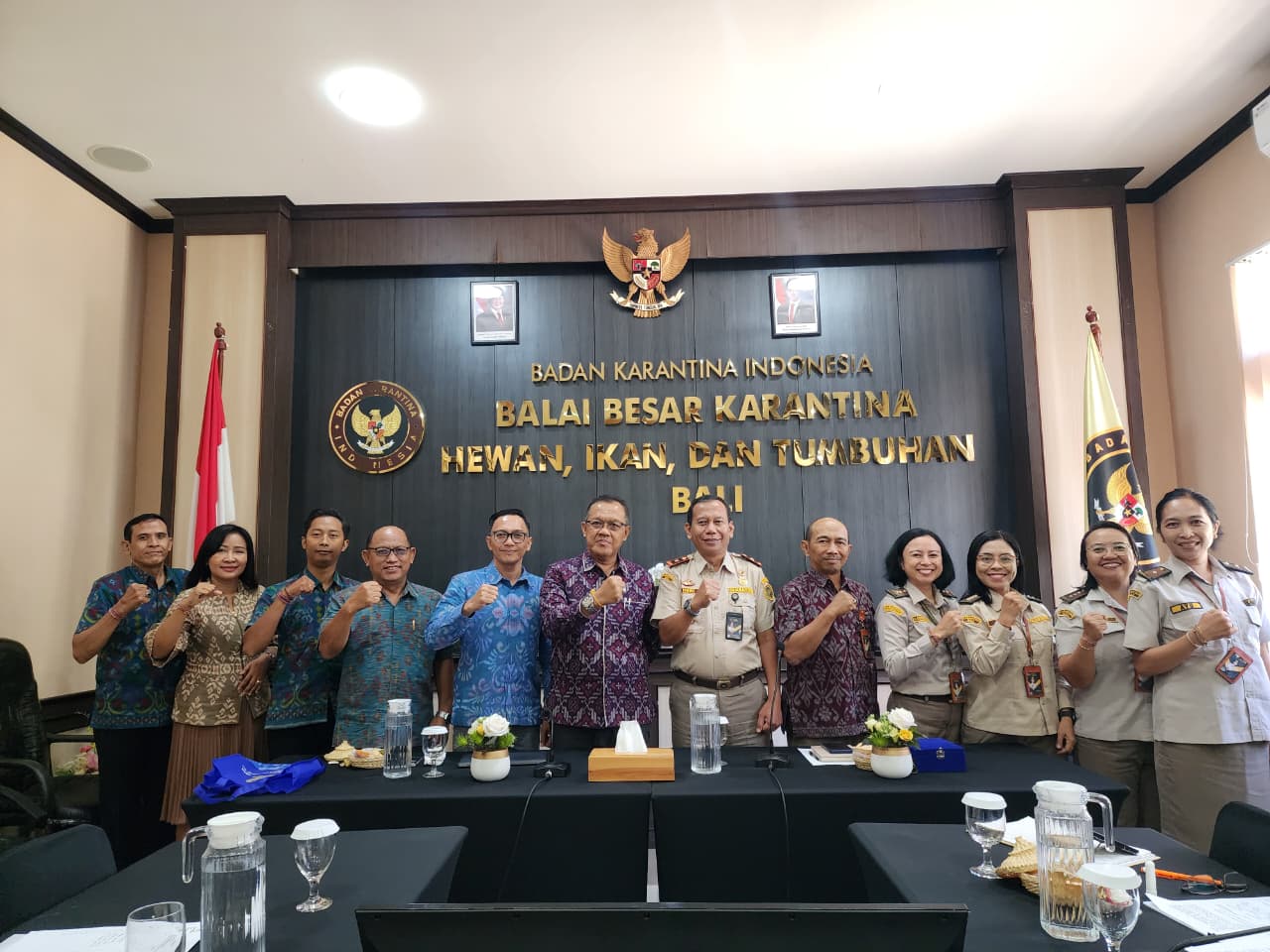
Denpasar – The Faculty of Veterinary Medicine, Udayana University (FVM Udayana) conducted a visit to the Bali Center for Animal, Fish, and Plant Quarantine as a follow-up to the ongoing collaboration on Tuesday, April 14, 2026. The visit was directly received by the Head of the Center, Mr. Heri Yuwono, A.Pi., S.Pi., M.P., accompanied by the Head of General Affairs, the Head of the Animal Quarantine Working Team, and quarantine veterinarians. This meeting served as a strategic forum to strengthen synergy between academia and government institutions in supporting animal health surveillance and enhancing human resource capacity.
In his remarks, the Dean of FVM Udayana, Prof. Dr. Drh. I Gusti Ngurah Sudisma, M.Si., stated that collaboration with quarantine institutions has been established for a long time, even since it was still known as agricultural quarantine. He emphasized the importance of expanding collaboration through data and information exchange, program coordination, and synchronization of activities to ensure tangible impacts. In addition, FKH students are expected to be directly involved in quarantine activities, with the target of implementing concrete joint programs in 2026.
From the academic development perspective, FVM Udayana offers opportunities for further education collaboration through a master’s program with a study period of 3–6 semesters. The learning system is designed to be flexible, with online lectures in the early semesters and offline sessions in the final stages. Students are also allowed to conduct research at their respective workplaces. Although a fully distance learning program is not yet available, the university can provide administrative support to facilitate the study process for quarantine staff.
Meanwhile, the Quarantine Center highlighted the potential for concrete collaboration in monitoring quarantine animal diseases, including strategic diseases, as well as laboratory testing and scientific studies. Collaboration can also take the form of outreach programs and webinars, as well as community service activities such as free vaccination and animal health check-ups. Both parties agreed to encourage outputs in the form of scientific publications based on quarantine data, while also ensuring the optimal management of student activities. This collaboration is expected to make a tangible contribution to controlling animal diseases and strengthening the quarantine system in Bali.
UDAYANA UNIVERSITY