 ENG
ENG
 INA
INA
AWATARA FVM Unud Promotes Integrated Farming Based on Farm Animal Welfare and the Waste-to-Feed Concept in Nusa Penida
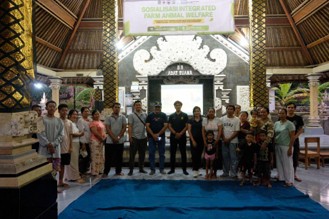
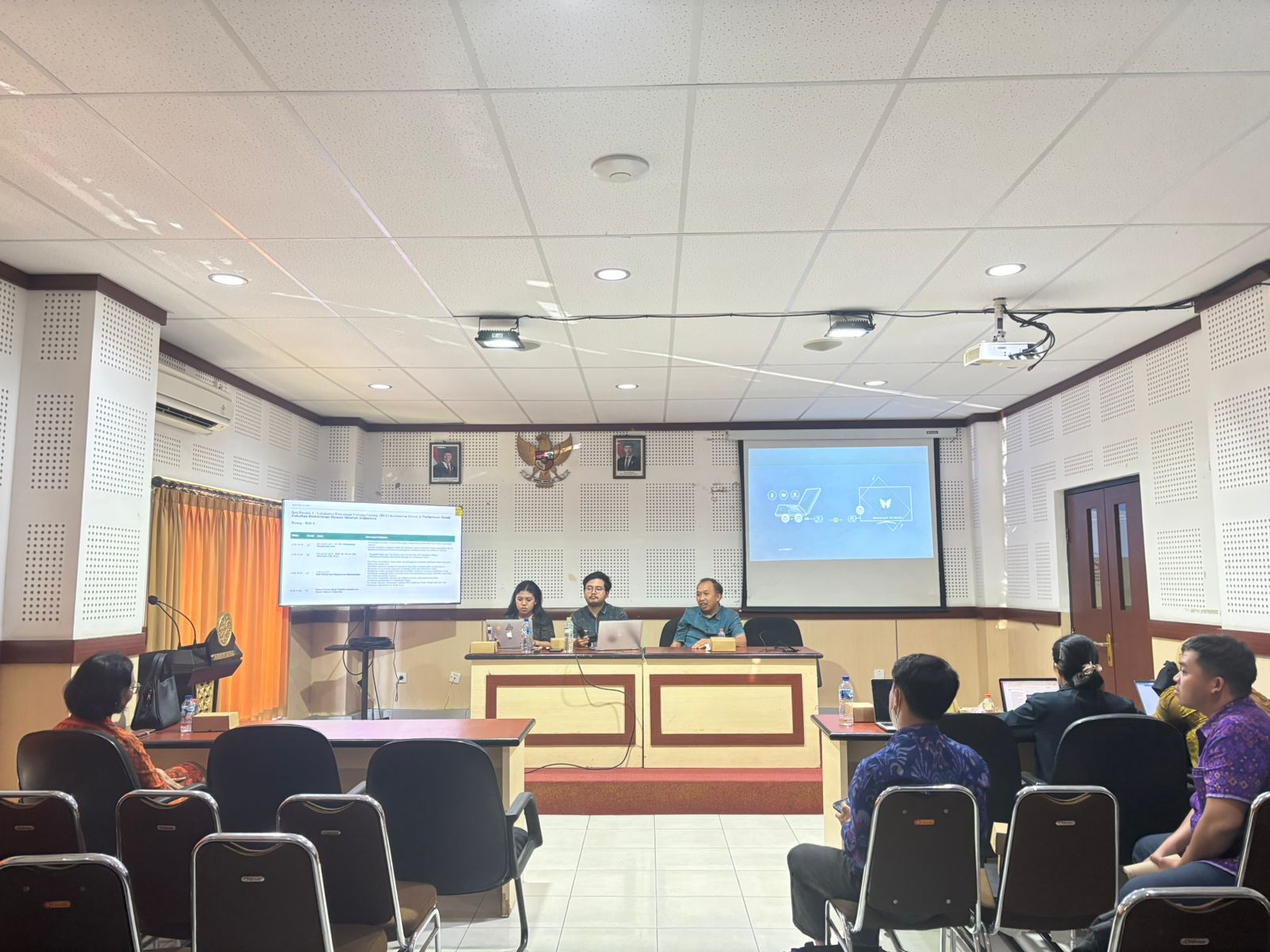
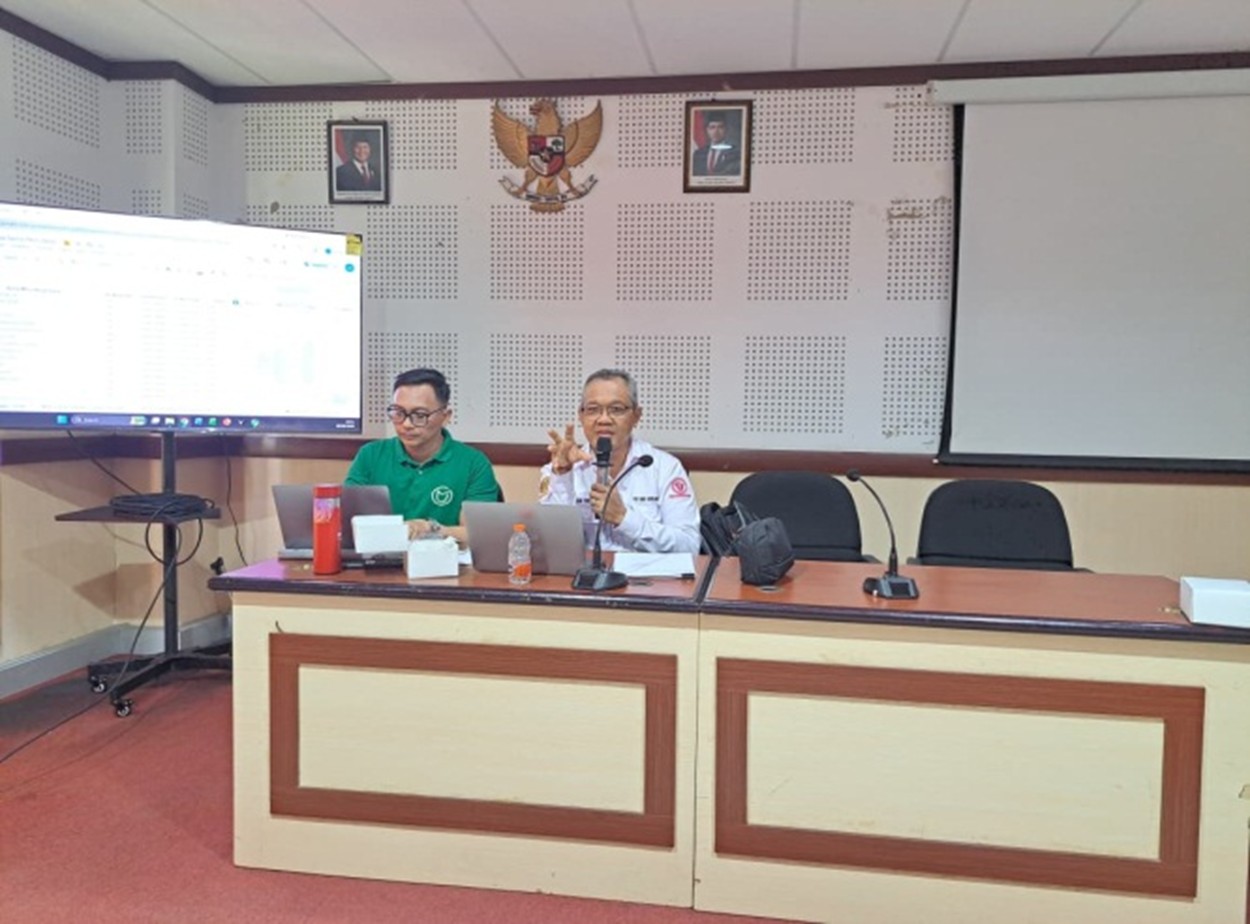
Nusa Penida, August 1, 2026 — The Faculty of Veterinary Medicine, Universitas Udayana (FVM Unud), through Animal Welfare Training, Assistance, Research, and Assessment (AWATARA), in collaboration with Field Supervisors (DPL) of the FVM Unud Community Service Program (KKN), conducted an educational and outreach activity on integrated farming for the communities of Buana Village and Kutampi Village, Nusa Penida, on Saturday (August 1).
The activity was part of an effort to introduce an integrated agricultural and livestock system that focuses not only on productivity but also on animal welfare, environmental management, and the sustainable utilization of local resources.
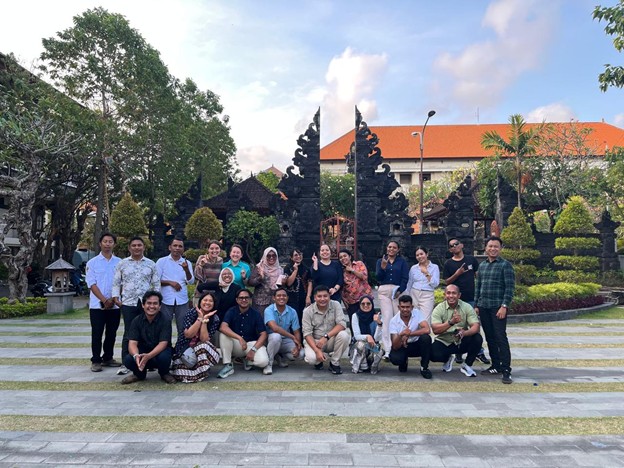
The activity was attended by dr. drh. Kadek Karang Agustina, Chair of AWATARA and a speaker at the event, FVM Unud KKN Field Supervisors from Buana and Kutampi Villages, as well as community members from both villages who have an interest in and are involved in chicken farming and household waste management.
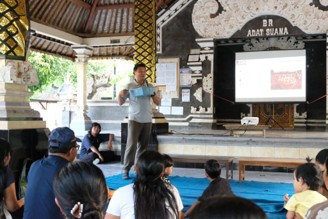
During the outreach session, participants were introduced to the concept of integrated farming, particularly how livestock activities can be integrated with waste management and the utilization of resources available in the surrounding environment.
One of the concepts introduced was waste to feed, which involves utilizing organic household waste as a resource for maggot cultivation. The maggots produced can subsequently be used as one of the feed sources for chickens.
This concept is expected to encourage the community to view organic waste not merely as waste, but as a resource that still has potential value and practical use.
In addition to environmental and feed-related aspects, the activity also provided an understanding of Farm Animal Welfare (FAW). Participants were encouraged to understand that improving livestock productivity should go hand in hand with animal husbandry practices that take into account the needs and welfare of chickens.
According to dr. drh. Kadek Karang Agustina, integrated farming can serve as a relevant approach for community-level development because it connects various aspects within a single system.
“We want the community not only to see chickens as a source of production, but also to understand how to raise chickens properly, utilize available resources, and manage waste. In this way, the environment, feed, livestock farming, and animal welfare can work together,” said dr. drh. Kadek Karang Agustina.
She added that this approach could serve as an initial step toward developing a more sustainable livestock system that is adapted to the local potential and conditions of the Nusa Penida community.
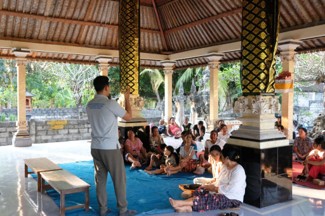
The activity did not stop at the delivery of educational materials. Participants also took part in a practical workshop on organic waste processing and maggot cultivation. During the workshop, participants were introduced directly to the basic stages of utilizing organic waste for maggot cultivation and how maggots can be developed as an alternative feed source for chickens.
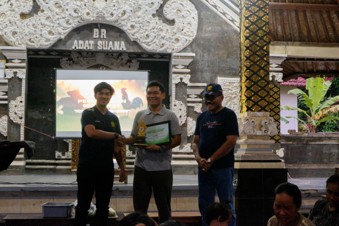
To support the continuation of the activity after the outreach session, AWATARA also distributed maggot cultivation kits to community members. The kits consisted of buckets and maggot eggs, enabling participants to immediately practice maggot cultivation independently at home or in their livestock areas.
This hands-on approach is expected not only to increase community knowledge but also to encourage participants to implement and develop waste management and livestock farming systems that are appropriate to local conditions.
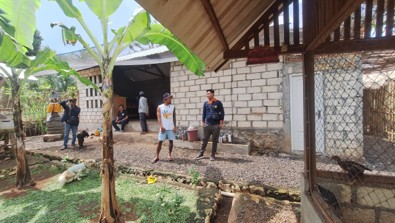
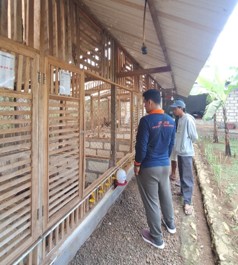
In addition to conducting community outreach, the AWATARA team also visited several chicken farms in Nusa Penida that implement cage-free and free-range systems. One of the locations visited was Gubuk Ayam dan Sayur Organik Nusa Penida. The visit provided an opportunity to engage directly with livestock business operators in discussions about chicken husbandry practices, the development of animal welfare-oriented farming systems, and opportunities to develop animal welfare-based livestock products.
During the meeting, the AWATARA team also provided information on the implementation of Farm Animal Welfare and the procedures for applying for animal welfare certification. This initiative is expected to create opportunities for livestock farms in Nusa Penida to improve their husbandry practices while adding value to their products.
“Farms that have implemented cage-free or free-range systems have very good potential for further development. What is important is not only the housing system, but also ensuring that animal welfare is genuinely implemented in daily practices and can be demonstrated through assessment and certification processes,” explained dr. Karang.
The AWATARA activity, conducted in collaboration with the FVM Unud KKN Field Supervisors, represents one of FVM Unud’s contributions to supporting local communities through a One Health approach by integrating animal health, environmental health, sustainability, and community well-being.
Through the integrated farming and waste-to-feed concepts, communities are encouraged to make more optimal use of available resources. Meanwhile, the introduction of Farm Animal Welfare is expected to strengthen the understanding that animal welfare is an important component of a responsible livestock production system.
The activity also opened opportunities for further collaboration and development among FVM Unud, AWATARA, local communities, livestock operators, and the KKN program in promoting a productive, environmentally responsible, and animal welfare-oriented livestock farming model in Nusa Penida.
Going forward, continued assistance and development of integrated farming practices are expected so that the knowledge gained by the community does not stop at the outreach activity but can be implemented and developed into practical initiatives that provide benefits for farmers, animals, and the environment.
Gallery
UDAYANA UNIVERSITY