 ENG
ENG
 INA
INA
KUB Chicken Farming Based on Animal Welfare, Highlighted at World Veterinary Day 2026 Encouraging Cross-Sector Collaboration to Support Sustainable Tourism in Bali

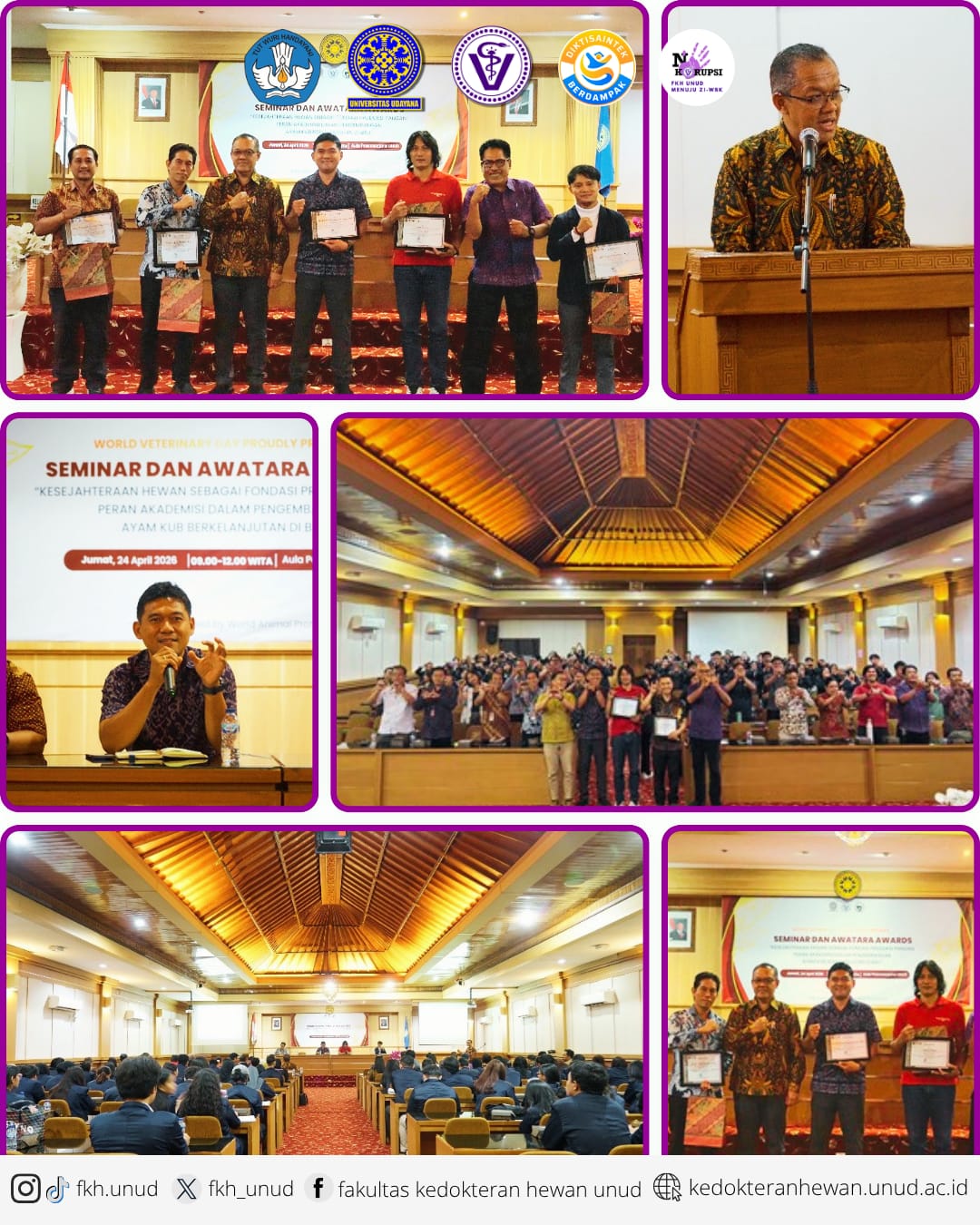
Denpasar, Bali – Kampung Unggul Balitbangtan (KUB) chicken has become a key highlight in the commemoration of World Veterinary Day 2026, held through a seminar and the AWATARA Award organized by the Faculty of Veterinary Medicine at Udayana University. The event emphasized the crucial role of academics and cross-sector collaboration in promoting sustainable livestock development in Bali while supporting the tourism sector.
The seminar brought together academics, business actors, stakeholders in agriculture, livestock, animal health, and tourism, as well as students as the next generation. The main focus of the event was to enhance understanding of KUB chicken development based on animal welfare as a solution for food security and safety, while also opening opportunities for premium market products.
“The livestock sector is a fundamental pillar in fulfilling the community’s food needs. The implementation of animal welfare in KUB chicken farming has proven to contribute to the quality of food products, and this must be supported by cross-sector collaboration,” said Prof. Dr. Drh. I Gusti Ngurah Sudisma, M.Si. while opening the event (24/04/2026).
During the seminar session, speakers from the Center for Agricultural Application and Modernization (BRMP), academics, and business practitioners explained that the development of KUB chickens has involved various stakeholders, ranging from superior seed providers to industry players. Integration between the livestock, agriculture, and tourism sectors is seen as having strategic opportunities, especially in meeting the growing demands of premium markets that increasingly prioritize product quality and traceability.
Dr. drh. Kadek Karang Agustina, MP. highlighted challenges in the national livestock sector, particularly the high dependency on the use of medications. He emphasized that animal welfare-based farming systems can improve livestock health while reducing the need for drugs, thereby minimizing the risk of residues in food products.
Meanwhile, business practitioner I Nyoman Sanjaya revealed that KUB chicken development in Bali faces challenges due to high feed prices caused by the decline of the local agricultural sector. Dependence on supplies from outside the island, such as rice bran and corn, has led to increased production costs. He stressed the importance of support from all parties, including government policies that ensure stable prices for farmers, so that businesses can continue and the agriculture–livestock ecosystem remains sustainable and contributes to long-term development.
As a form of appreciation, the event also presented the AWATARA Award to six businesses committed to using free-range chicken as their main commodity: Warung Kampung Pedas, Ayam Goreng Weepang, Warung Men Tempeh 1978, Warung Men Tempeh Ibu Ferry, Bebek dan Ayam Mas Budi, and Soto Ayam Surabaya. This recognition is expected to encourage industry players to continuously improve production quality while prioritizing animal welfare principles.
“This activity is very important in educating us as business actors. Hopefully, events like this can continue to be held so that we remain consistent and more people switch to consuming free-range chicken,” said Willi from Ayam Goreng Weepang.
This event reaffirmed that cross-sector collaboration is key to maintaining food security in Bali. The integration of agriculture, livestock, and tourism sectors offers significant opportunities to enhance the value of local products such as KUB chicken. The event also received full support from World Animal Protection.
Gallery
UDAYANA UNIVERSITY