 ENG
ENG
 INA
INA
FVM Unud Student Deepens Immunology Research through International Internship Program at Academia Sinica, Taiwan
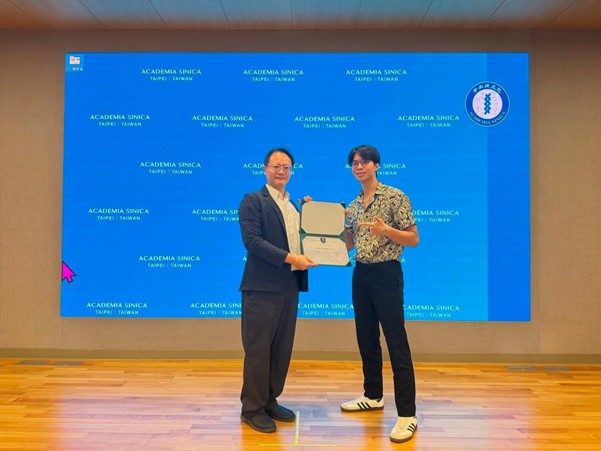
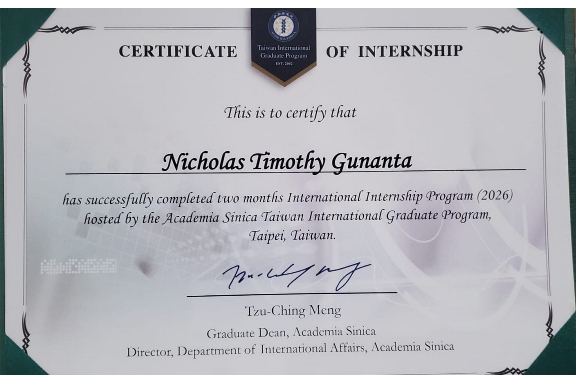
Taipei, Taiwan — Nicholas Timothy Gunanta, an undergraduate student of the Veterinary Medicine Study Program at the Faculty of Veterinary Medicine, Udayana University (FVM Unud), participated in the Taiwan International Internship Program (TIIP) at Academia Sinica, Taipei, Taiwan, from June to July 2026. The program provided an opportunity for him to gain research experience in an international academic environment while strengthening his competencies in biomedical sciences, particularly immunology and glycobiology.
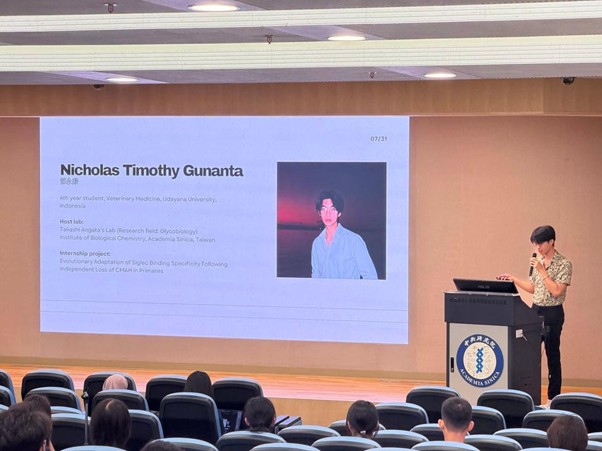
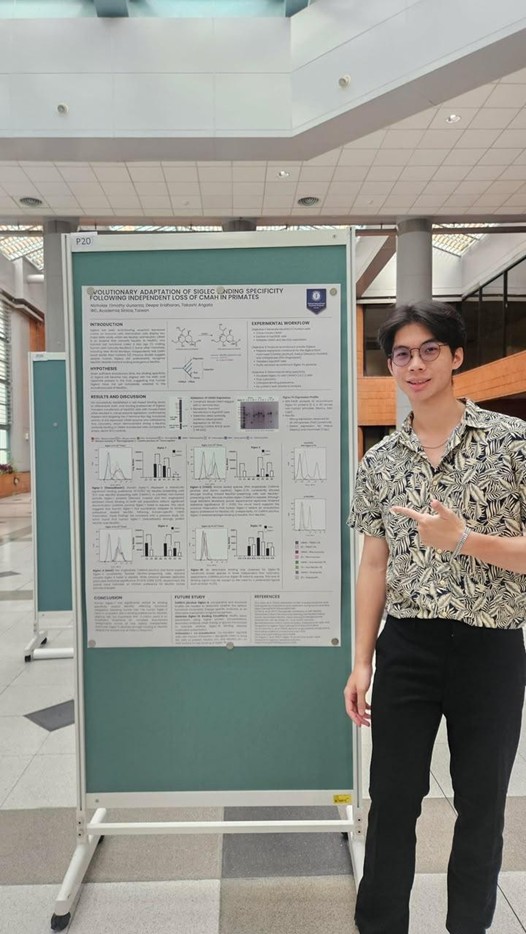
During the program, Nicholas was placed at the Institute of Biological Chemistry, Academia Sinica, under the supervision of Dr. Takashi Angata. He was involved in a research project examining the evolutionary relationship between cell-surface sugar molecules, known as sialic acids, and immune receptors called Siglecs. The research was conducted under the topic “Evolutionary Adaptation of Siglec Binding Specificity Following Independent Loss of CMAH in Mammalian Species.”
The research focused on changes in the binding preferences of Siglec receptors toward sialic acids in several mammalian species that have experienced the loss of the CMAH gene. This gene plays a role in the production of Neu5Gc, one of the forms of sialic acid found on the surface of cells.
To investigate the research question, Nicholas participated in various stages of the research process, ranging from literature reviews and scientific discussions to laboratory experiments. He studied the fundamental concepts of glycobiology, Siglecs, Neu5Ac, Neu5Gc, as well as the role of the CMAH gene in the immune system and evolutionary changes in mammals.
During the experimental activities, he learned mammalian cell culture using Expi293F cells, molecular cloning techniques for constructing expression plasmids, and recombinant Siglec-Fc protein production. He also participated in cell transfection using CMAH expression plasmids to generate Neu5Gc-positive cells and control cells.
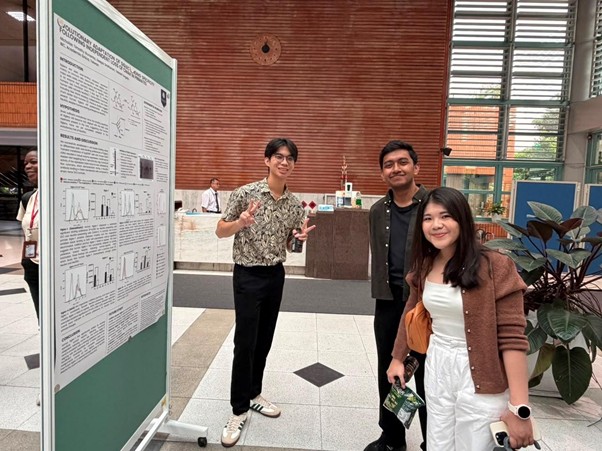
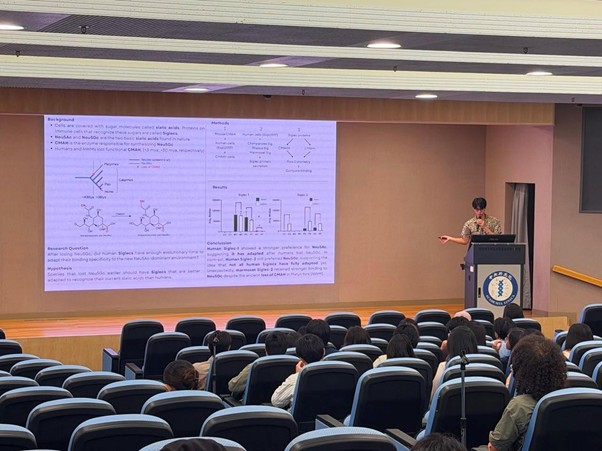
The research process continued with the analysis of interactions between Siglec-Fc proteins and cells using flow cytometry. The resulting data were analyzed to compare Siglec binding patterns between Neu5Gc-positive and Neu5Gc-negative cells. The research findings were subsequently presented in the form of a scientific presentation and research poster.
Throughout the TIIP, Nicholas gained experience in several modern laboratory techniques, including mammalian cell culture, transient transfection, molecular cloning, DNA recombination, recombinant protein production, and flow cytometry. In addition to laboratory skills, he also developed competencies in data analysis, basic statistics, and the preparation of scientific presentations and posters.
The experience provided a deeper understanding of how scientific hypotheses are tested through structured experimental processes. He also gained insight into how evolutionary changes can influence immune receptor functions across different mammalian species. The research process further strengthened his ability to review scientific literature, analyze data, and communicate research findings in an academic setting.
Beyond technical aspects, the internship also introduced Nicholas to the research culture within an international academic environment. Interactions with researchers and students from different countries helped develop his English communication skills, teamwork abilities, and understanding of the importance of collaboration, scientific discussion, and research integrity.
This activity aligns with the Sustainable Development Goals (SDGs), particularly SDG 4: Quality Education, through the provision of opportunities for students to gain learning and research experience in an international academic environment. The program not only provided theoretical knowledge but also offered direct experience in applying biomedical research methods.
In addition, research focusing on immunology and molecular biology is relevant to SDG 3: Good Health and Well-being. Strengthening research competencies in biomedical sciences can contribute to the development of human resources supporting research on the immune system, infectious diseases, and broader health-related issues.
The TIIP also reflects SDG 17: Partnerships for the Goals through international academic experiences and student involvement in a global research environment. Knowledge exchange and collaboration are important components in strengthening research capacity and expanding academic networks.
For Nicholas, the experience at Academia Sinica provided valuable preparation for developing his academic and professional competencies, particularly in biomedical research, immunology, glycobiology, infectious diseases, and the One Health approach.
The participation of an FVM Unud student in the international internship program demonstrates how veterinary medical education can be strengthened through research experiences integrated with developments in biomedical sciences and cross-border academic collaboration.
Gallery
UDAYANA UNIVERSITY