 ENG
ENG
 INA
INA
FVM Unud Strengthens the Use of OASE to Support Outcome-Based Education
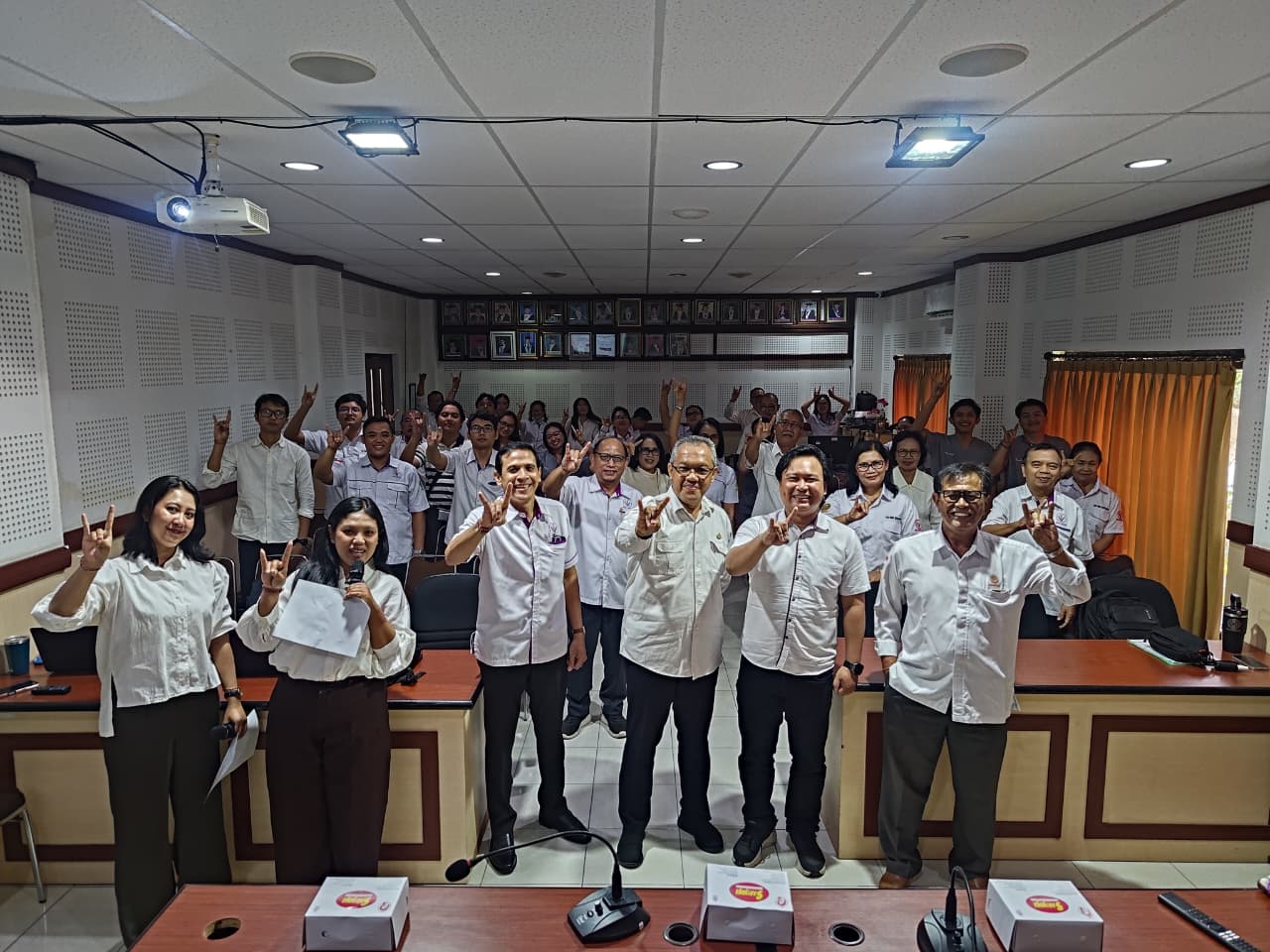
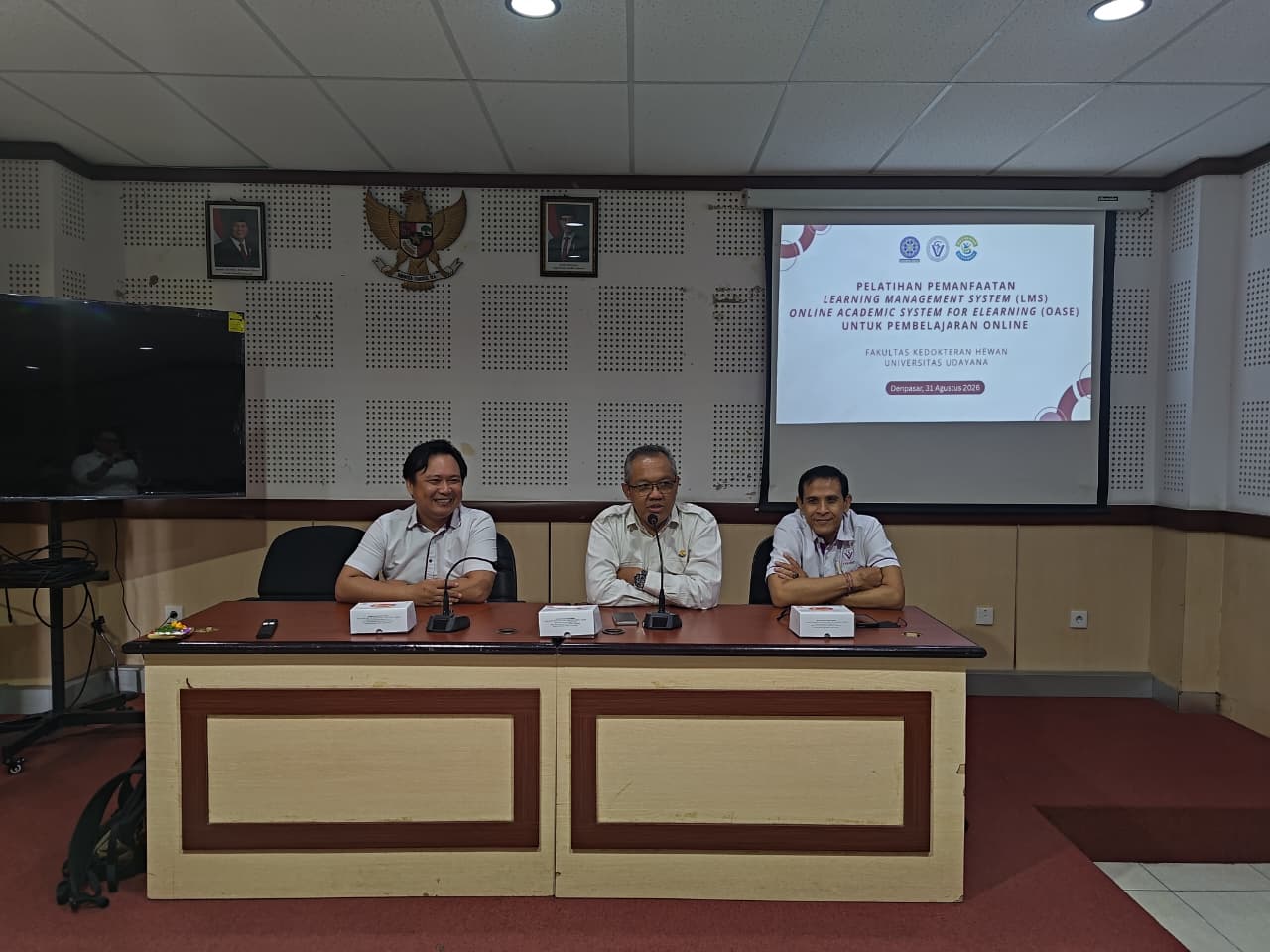
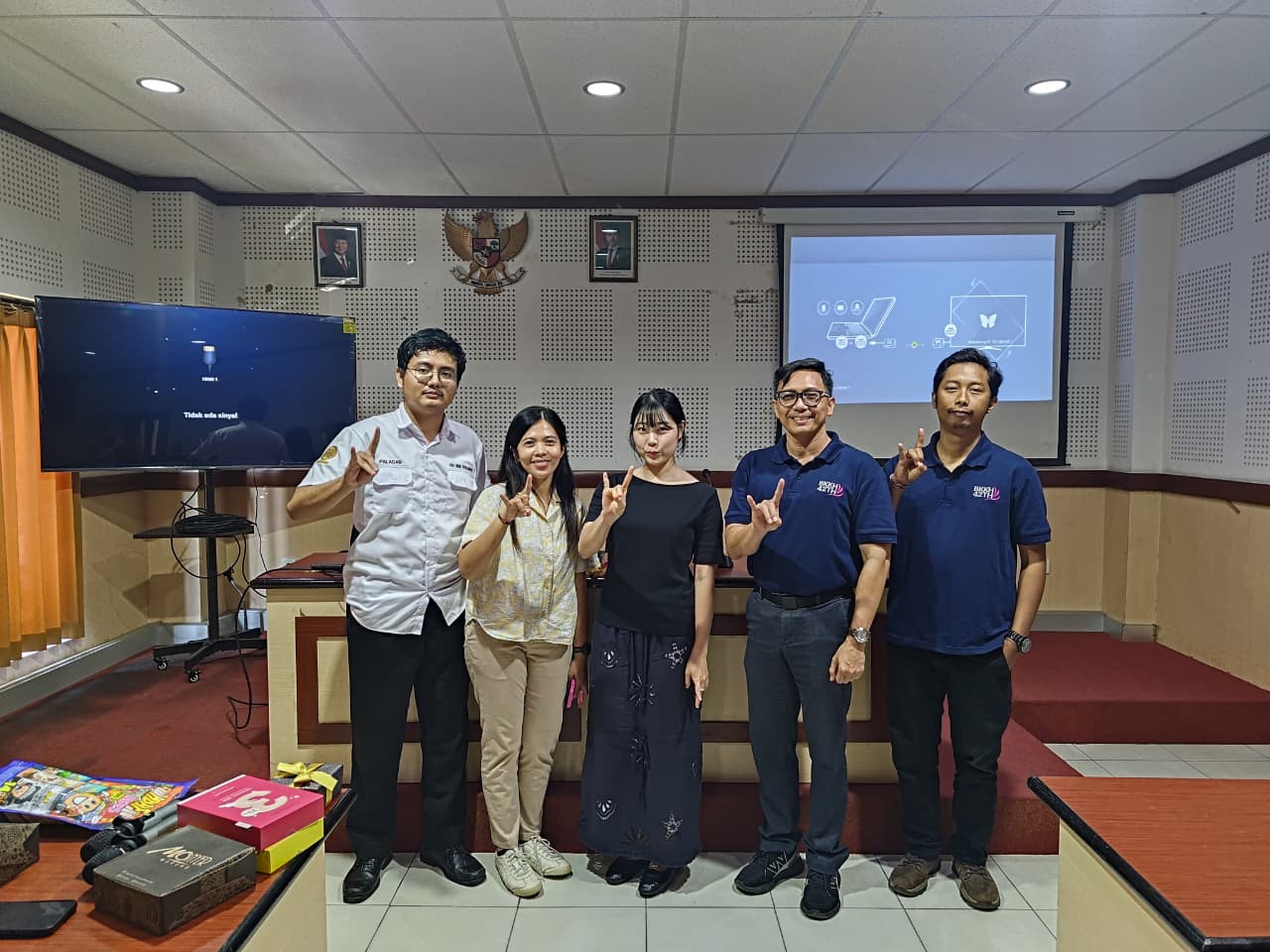
Denpasar — The Faculty of Veterinary Medicine, Udayana University (FVM Unud) is strengthening the use of Online Academic Service for Education (OASE) as a digital learning platform to support the implementation of Outcome-Based Education (OBE). The initiative was carried out through training and assistance for lecturers, particularly in managing classes, learning materials, assessments, and various features available on OASE. The activity was held on Monday, August 31, 2026, at the Meeting Room on the first floor of the Sudirman Campus.
During the activity, a representative of the Institute for Learning Development and Quality Assurance (LP3M) of Udayana University, Dr. I Dewa Made Bayu Atmaja Darmawan, S.Kom., M.Cs., explained that the program was part of an evaluation of e-learning utilization across several faculties at Udayana University. Based on the evaluation presented during the activity, FVM Unud recorded a relatively high level of e-learning utilization. The faculty was reported to contribute approximately 28 percent, based on the number of classes using e-learning, with the largest contribution coming from the bachelor program.
The use of OASE is intended not only to support digital learning but also to facilitate the implementation of OBE. In an OBE-based learning system, teaching and assessment processes need to be directed toward the achievement of Course Learning Outcomes (CPMK) and Graduate Learning Outcomes (CPL). One of the expected outcomes is the availability of learning and assessment portfolios as evidence of students' achievement of learning outcomes.
The implementation of OASE will subsequently be monitored and evaluated by quality assurance units at the study program level. At the initial stage, course coordinators are encouraged to use OASE to manage the learning process. Technical assistance will also be provided to support lecturers in data import, class management, and the adjustment of learning materials.
The training covered class management, the preparation and provision of teaching materials, and assessment management. Dr. drh. I Gede Soma, M.Kes., explained that course management on OASE includes management, learning materials, and assessment. Lecturers were also introduced to the management of parallel classes, the addition of teaching materials in the form of files, folders, and videos, as well as the management of students and student groups.
Meanwhile, drh. Yudha Yaksa Crada Yoga Arum Raharjo, S.K.H., M.Si., delivered a session on assigning tasks through the Assignment feature. This feature allows lecturers to set assignment instructions, submission deadlines, file formats, and individual or group assignments, as well as provide feedback. OASE also provides a Gradebook to support the management of assessment components, the settings of which need to be aligned with the Semester Learning Plan (RPS).
The next session was delivered by Prof. Dr. drh. I Nengah Kerta Besung, M.Si., covering the management of learning activities, Gradebook, and Workshop. Through the Workshop feature, students can participate in peer assessment, allowing them to assess the work of their peers. The assessment process can use rubrics, enabling evaluation criteria to be organized in a more structured manner. Students can also receive feedback through the process.
The training is part of FVM Unud's efforts to encourage the academic community to become familiar with OASE as one of its digital learning platforms. In addition to supporting the management of learning materials and activities, the use of OASE is expected to facilitate the documentation, monitoring, and management of assessment processes in line with OBE-based learning.
The activity is also aligned with Sustainable Development Goal (SDG) 4: Quality Education, particularly in strengthening the quality of learning processes and the use of educational technology. The utilization of digital learning platforms is also related to SDG 9: Industry, Innovation and Infrastructure, particularly through the use of digital infrastructure and technology to support education.
Going forward, the use of OASE is expected to be implemented consistently and systematically across FVM Unud, while supporting learning and assessment management that is aligned with the implementation of OBE.
Gallery
UDAYANA UNIVERSITY