 ENG
 INA
FVM Unud and BBV Denpasar Strengthen Collaboration, Discuss Student Internships and Rabies Control
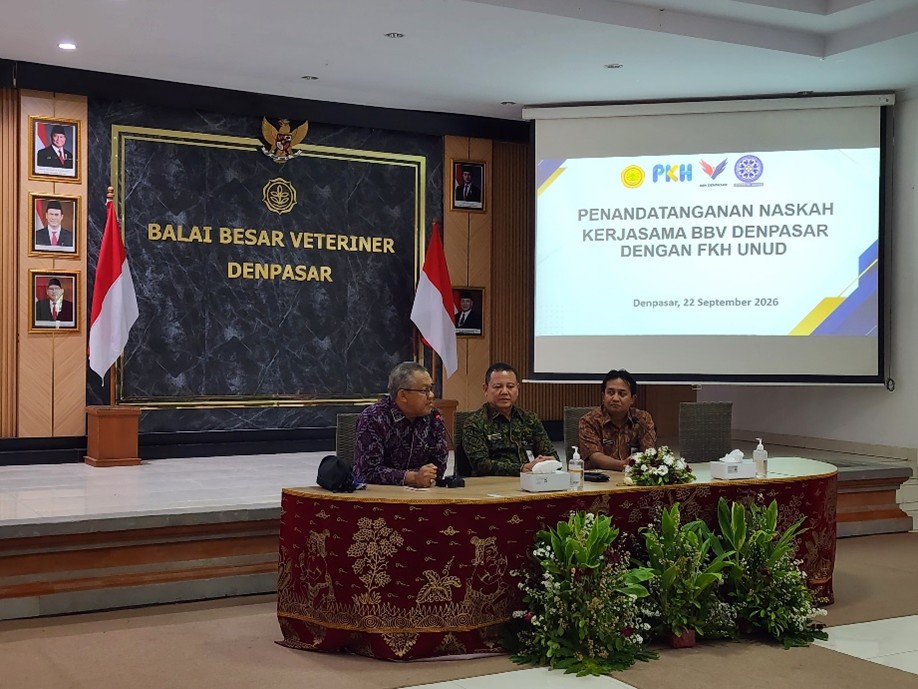
Denpasar, September 22, 2026 — The Faculty of Veterinary Medicine, Universitas Udayana (FVM Unud) and the Denpasar Veterinary Center (BBV Denpasar) strengthened their collaboration through the signing of a Cooperation Agreement, held at the BBV Denpasar Meeting Room. The meeting provided an opportunity to discuss strengthening students’ academic and field-based activities, opportunities for research collaboration, and support for activities related to animal health, including rabies.
The event began with remarks by BBV Denpasar staff member drh. I Ketut Narcana, followed by remarks from the Head of BBV Denpasar, Dr. drh. I Gede Eka Budhiyadnya, M.P., and the Dean of FVM Unud, Prof. Dr. drh. I Gusti Ngurah Sudisma, M.Si. Each institution also introduced its respective team members attending the Cooperation Agreement signing ceremony.
The meeting discussed the role of the Cooperation Agreement as a legal framework for collaboration between FVM Unud and BBV Denpasar. Through this framework, the implementation of joint activities is expected to support the respective duties and functions of each institution while strengthening communication in collaborative activities.
One of the main topics discussed was the Kampus Berdampak Internship Program organized by FVM Unud, involving 10 partner villages in Badung Regency. The program provides students with opportunities to gain field-based learning experience over one semester, including activities related to rabies control.
As part of the program, students provide education to local communities as well as elementary and junior high school students to increase their understanding of and awareness about rabies. The meeting also discussed the handling of suspected rabies samples. Students who obtain suspected rabies samples from dogs during activities in the partner villages are permitted to bring the samples to BBV Denpasar for testing.
The meeting also highlighted the importance of clear administrative documentation for the placement of FVM Unud students at BBV Denpasar, particularly regarding the purpose of their activities, whether for internships, Field Internship, or research.
During the discussion session, BBV Denpasar laboratory staff also shared input based on their experience supervising FVM Unud students. Through the Pathology Laboratory, drh. Ely Supartika expressed readiness to collaborate on pathology research, including research related to tumors. In such research collaborations, BBV Denpasar team members who contribute to supervision are expected to be appropriately acknowledged in scientific publications based on their involvement.
Meanwhile, the Veterinary Public Health Laboratory, represented by drh. Dayu Andini, expressed its readiness to accept students for internships and research related to antimicrobial resistance (AMR). From the Parasitology Laboratory, drh. Agung Wisnu suggested that students undertaking internships at BBV Denpasar should have a basic understanding of animal diseases. According to him, final-year students would be more suitable, as they have already acquired knowledge of various animal diseases.
The meeting also discussed that BBV Denpasar’s current duties and functions are limited to the disease investigation stage, while subsequent stages have become part of BRIN’s responsibilities. BBV Denpasar also noted that collaboration is among the aspects considered in evaluations at the national, regional, and international levels, including in relation to scientific publications.
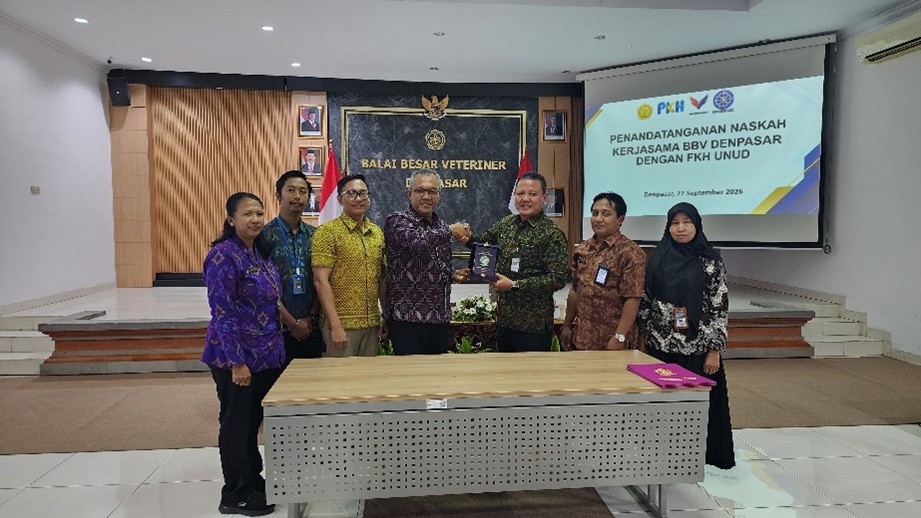
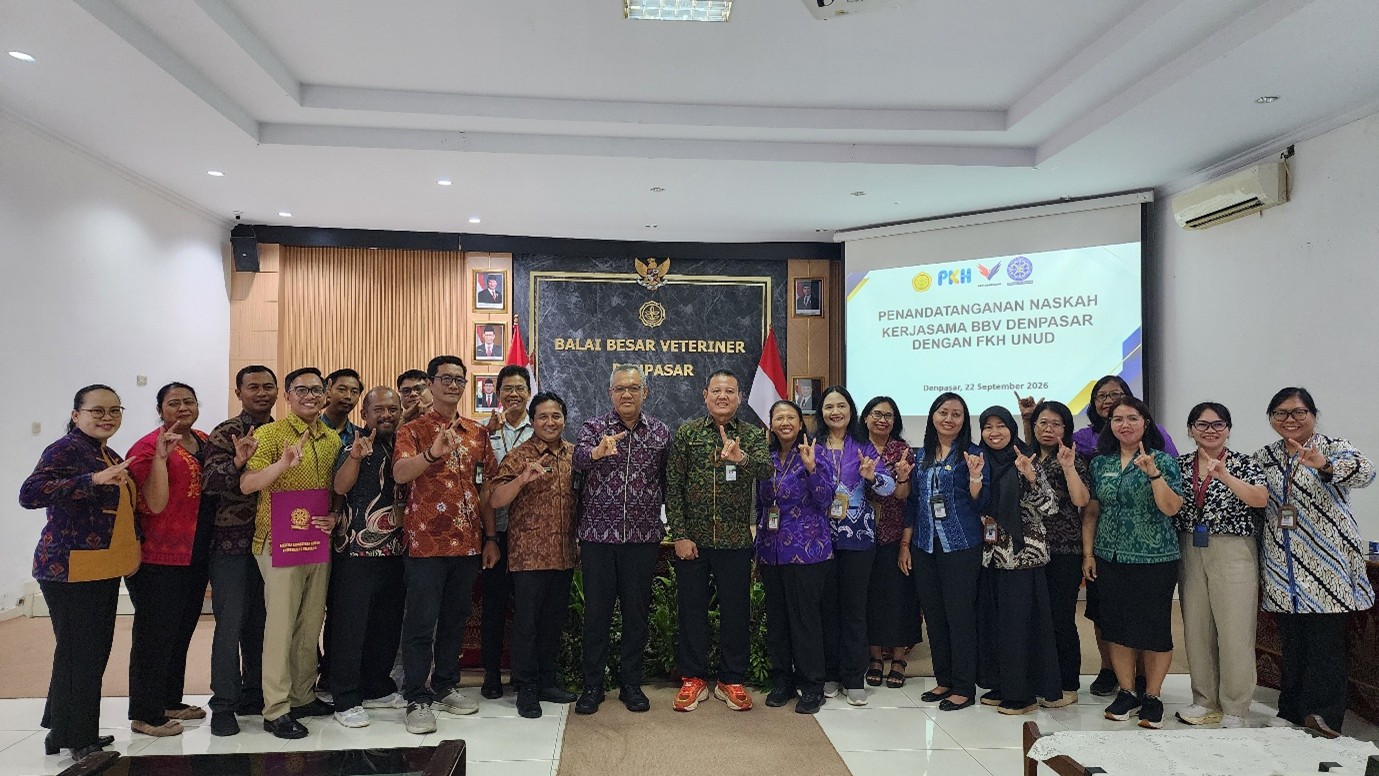
Following the discussion, FVM Unud and BBV Denpasar signed the Cooperation Agreement as a basis for inter-institutional collaboration. The activity concluded with a group photograph.
Through the Cooperation Agreement, FVM Unud and BBV Denpasar are expected to establish better communication, particularly in the placement of students for internships, Field Internship, and research. Clear objectives and administrative documentation through official letters are important to ensure that each activity is carried out in accordance with the respective needs and responsibilities of the institutions.
This collaboration also contributes to SDG 3: Good Health and Well-Being, through activities related to rabies education and control; SDG 4: Quality Education, by strengthening students’ direct learning experiences in field and laboratory settings; and SDG 17: Partnerships for the Goals, through strengthened institutional collaboration between higher education and veterinary institutions.
Going forward, the collaboration between FVM Unud and BBV Denpasar is expected to provide a foundation for more structured student activities and research while strengthening coordination between the two institutions in accordance with their respective duties and functions.
Gallery
UDAYANA UNIVERSITY